Just so, how is economics not a zero sum game?
But the economy isn't a zero-sum game. The sum of the gains and losses of all players does not consistently equal zero. The undeniably growing wealth disparity shows far more clearly than income distribution which groups have benefited from the economic growth of the past to a more significant degree.
Beside above, does capitalism lead to wealth inequality? Capitalism, as Thomas Piketty's “Capital in the Twenty-First Century” shows, relentlessly worsens wealth and income inequalities. That inherent tendency is only occasionally stopped or reversed when masses of people rise up against it.
Simply so, is wealth a zero sum game?
At any given time, wealth is zero sum. If you want more wealth you have to take it from someone. However, over a period of time, this isn't the case. In the sense that wealth can be invested to produce more wealth, wealth is not a zero sum game.
Why is international trade not a zero sum game?
Taking a step back, most transactions or trades are inherently non-zero-sum games because when two parties agree to trade they do so with the understanding that the goods or services they are receiving are more valuable than the goods or services they are trading for it, after transaction costs.
Related Question Answers
Is the economy a positive sum game?
Between 1800 and 2016, the Gross Domestic Product (GDP) of the United States grew by 82,806% in real terms. This was a historically unprecedented explosion of income, wealth, and material well-being and its benefits have been experienced by all.What is a zero sum mindset?
Zero-sum thinking perceives situations as zero-sum games, where one person's gain would be another's loss. The term is derived from game theory. However, unlike the game theory concept, zero-sum thinking refers to a psychological construct—a person's subjective interpretation of a situation.Is the prisoner's dilemma a zero sum game?
Cooperation is usually analysed in game theory by means of a non-zero-sum game called the "Prisoner's Dilemma" (Axelrod, 1984). The idea is that each player gains when both cooperate, but if only one of them cooperates, the other one, who defects, will gain more.How do you win a zero sum game?
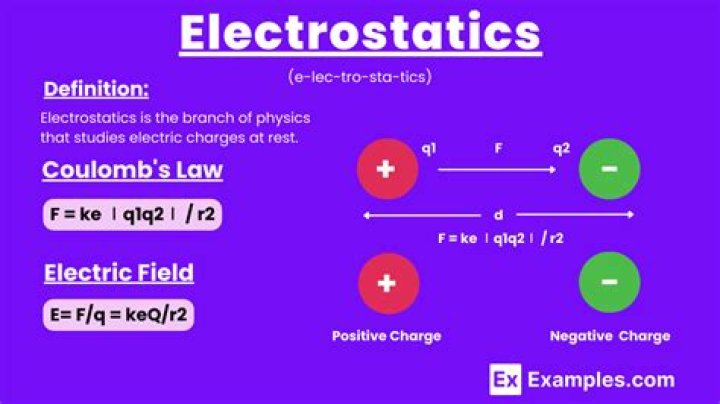
In game theory and economic theory, a zero-sum game is a mathematical representation of a situation in which an advantage that is won by one of two sides is lost by the other. If the total gains of the participants are added up, and the total losses are subtracted, they will sum to zero.Is business a zero sum game?
Here's the thing: business isn't a zero sum game. Working together in a collaborative manner, rather than a competitive manner, creates the opportunity for each participant to gain.” Read more about how he ties this concept and business wins into his own community and what they're doing here.What is a zero sum game in international relations?
In a two-person zero-sum game, what one actor wins the other loses; if A wins, 5, B loses 5, and the sum is zero. In some games, both parties can lose, and by different amounts or to a different degree. So-called n-person games include more than two actors or sides.What are non zero sum games?
In game theory, situation where one decision maker's gain (or loss) does not necessarily result in the other decision makers' loss (or gain). In other words, where the winnings and losses of all players do not add up to zero and everyone can gain: a win-win game.What is a positive sum game?
Positive-sum game, in game theory, a term that refers to situations in which the total of gains and losses is greater than zero. Positive-sum outcomes occur in instances of distributive bargaining where different interests are negotiated so that everyone's needs are met.Is life a zero sum game?
In the economic theory, a zero-sum game is a representation of a situation where each participant's loss or gain is exactly balanced by the losses and gains of other participants. The total sum of all gains and losses is exactly zero. Life is not a zero-sum game.Can new wealth be created?
There are two ways one can obtain more wealth. It can be taken from someone else, or it can be created. The former has been too common in world history. Members of one village or country would march over to pillage another village or country.Is wealth finite or infinite?
At any moment in time, total global wealth has a finite value. But over time, total global wealth can increase without limits, so wealth is therefore an infinite concept.Is there a limit to wealth creation?
The Single-Person Speed LimitYou can't manufacture, unless you manufacture something defined by the creator, i.e. art. You can't do anything that requires complex infrastructure you own.
Is there a finite amount of money in the world?
Is there a finite amount of money in the world? No, there is no finite amount of “money” because the idea of “money” is simply a human concept. It happens to be a fact of life, especially in today's world, that every nation must have a medium of exchange in order to function.Is wealth a fixed pie?
The term "fixed pie fallacy" is also used more generally to refer to the idea that there is a fixed amount of wealth in the world. This and other zero-sum fallacies can be caused by zero-sum bias.Is wealth created or just distributed?
Wealth is created by, and morally belongs to the individual creator.Does capitalism help the poor?
By assuming the autonomy of the individual, capitalism grants dignity to the poor. By affirming people's right to their own labor, regardless of their position on the economic ladder, capitalism offers the poor the means to improve their own well-being.Can capitalism survive without poor people?
In short, my answer is yes, capitalism can survive without poverty provided the level of greediness is low (don't ask me how this can be done) in the other hand socialism cannot survive without poverty as this is its natural product distributed throughout the population.Why do billionaires want more money?
They became billionaires by creating value in the market and that habit of creating value for the market produces the results of increase wealth, which leads to more money then they can spend, so they follow their other habits of financial discipline, budgeting, and investing, which leads to more wealth.Does capitalism make the rich richer?
The capitalist system is a system whereby the rich get richer and the poor get poorer, the rich can reinvest their capital whilst the poor have to continue to work and spend every penny they have on living costs. These living costs, including utility bills and food, are profits for the rich.What are the disadvantages of capitalism?
Cons of capitalism- Monopoly power. Private ownership of capital enables firms to gain monopoly power in product and labour markets.
- Monopsony power.
- Social benefit ignored.
- Inherited wealth and wealth inequality.
- Inequality creates social division.
- Diminishing marginal utility of wealth.
- Boom and bust cycles.
Is capitalism a good thing?
Capitalism is goodThere are many positives of capitalism. Capitalism ensures efficiency because it is self-regulated through competition. It promotes innovation, freedom, and opportunity. Capitalism meets the needs of the people and is beneficial to societies as a whole.
Who controls the world's wealth?
AmericansDo billionaires help the economy?
In theory, billionaires generate a positive economic impact through the creation of jobs and services for the public.Is inequality necessary for capitalism?
Why Inequality is an Essential ingredient of CapitalismIf there was not this profit incentive, entrepreneurs would not undertake the risk of setting up a firm. Therefore, you can say the potential of reward makes inequality an essential ingredient of capitalism.